
Musings On Gratitude
Knowing the well-documented health benefits of gratitude practice, how do we weave it into our coaching without being annoying?

Meet Sky
I follow a wonderful Substack writer Sky Kershner, a MINT trainer (Motivational Interviewing Network of Trainers) and founder of Everyday MI, where he offers training and open practice sessions for those interested in improving their motivational interviewing skills.
His About Page starts like this . . .
“Everyday MI is space for people who want to get better at helping others, who want to be more effective and less annoying.”
That’s Sky.
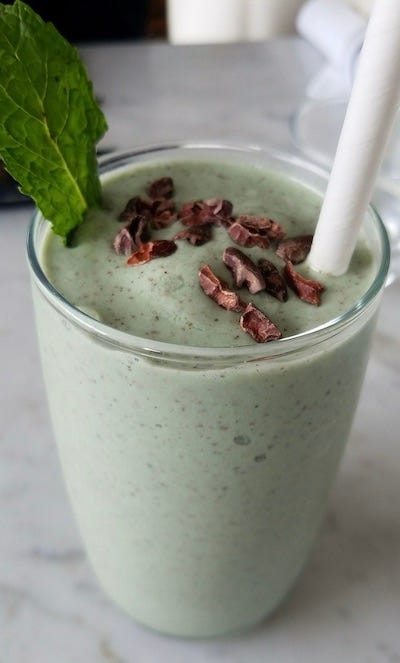
I’m on Sky’s email list and for 100 days straight (I think even more now) he has offered short teachings on MI he calls “snacks.” Snacks are Sky’s thing—he shares these tidbits of wisdom for free but, as he puts it, you can always support his work in smoothies.
His poetic subject lines are often enough to convey his message—something I appreciate as I rush to get into the “productive” part of my day.
“Be Yourself”
“The Music of Your Voice”
“Healing and Helping Go Hand and Hand”
“Walking at the Pace of the Conversation”
I hear ya, Sky . . . more helpful, less annoying.
Sky on Gratitude
Recently, Sky was musing in the Substack notes section on how the simple practice of writing a daily gratitude list has supported him for over 40 years.
I think the whole note is worth sharing here. It demonstrates the power of this simple practice.
“I started going to AA in 1985.
I was young and skeptical of most things.
Well, actually, I was arogant and sarcastic of everything and everybody.
Suspicious, yes.
Paranoid, a lot.
There were several take-aways from those yearly 12-step days that have stayed with me. And one of them is a gratitude practice, usually in the form of a list or a journal.
Forty years later,
I’m still writing them.”
We Get It
There’s no need to convince us health and wellness coaches that gratitude practice is good for wellbeing.
Rooted in the science of positive psychology, we learned in our training programs there is strong evidence to suggest that reflecting on what we are grateful for in life leads to benefits across several dimensions of health including the cognitive, physical, and social domains.
It is one of the many tools we have in our coaching toolbox to support improved health, wellbeing, and flourishing in our clients.
The work of positive psychologist, Barbara Fredrickson, who developed the Broaden-and-Build Theory of Positive Emotions, offers my favorite perspective on gratitude. Viewed through the lens of other positive emotions such as joy, awe, and creativity, she says,
“Gratitude, like other positive emotions, broadens and builds,”
Which is to say, when cultivated consciously, gratitude BROADENS our perspectives, inviting new possibilities and ideas into the mix that can be used to BUILD lasting personal resources such as resiliency, social connections, and problem solving skills.
I am reminded how, when navigating disappointment as a young girl, my mother used to say, “Count your blessings, Meggie.”
It was a faith-based approach I still use today, most likely one she learned from her mother—and a reminder that people and cultures have embraced gratitude practice far longer than we have been talking about it, and, for that matter, monetizing it through books, fancy journals, and gratitude-scented candles (yes, those are a thing).
Pushing Gratitude
With such compelling evidence, how do we get around “advising” “educating” or “prescribing” gratitude to our clients knowing these coaching behaviors are all pesky roadblocks that can, in Sky’s words, be more annoying than helpful?
We’ve all had the experience of sharing a wellness practice with our clients that we have found helpful—taking a 10-minute walk, putting your phone away an hour before bedtime, learning how to say “no” more often, only to be met with an avalanche of sustain talk.
Even gratitude can’t stand up to what we know to be true about human behavior.
Inviting Gratitude
I decided to take my musings on gratitude to my wonderful friend and coaching colleague, Denise Mark, MPH, NBC-HWC, CHES, with whom I coached on-site in corporate for 2 1/2 years.
I texted her—and she texted back from the school pick-up line.
She’s a seasoned health and wellness coach with a solo practice now, a busy mom of three young boys, and a recent Substacker who enjoys leaning into the power of inquiry in both her coaching and her writing.
“Let me think about that,” she said. “Gratitude is a little different than coaching for strengths or ‘what’s working.’”
She came back later, most likely texting from the stands of a chilly hockey rink where one or more of her boys were chasing pucks. “I like thinking about this topic,” she typed. “While it is easy to come up with what we want to change, what would it look like to focus on what is going right this week? What’s working, what about your health and wellbeing are you grateful for?”
Evoking . . . there you go. It turns out we have a tool that helps instead of annoys.
A Simple Question
Isn’t gratitude practice simply a strategic open-ended question that pulls for change talk and sparks self-exploration? Any way you phrase it, the inquiry is likely to turn a client toward the light, help them connect with the positive over the deficit . . . generate of few feel-good hormones from the space of hope and possibility.
It can be argued that an inquiry of this type, offered out of the blue, just because it’s that thankful time of year again, is too coach-led—and coaching is client-led. Maybe our clients are perfectly content existing in the coziness of contemplation, and putting our finger on the scale toward optimism is questionable coaching.
Legit pushback from purists.
Recently on LinkedIn though, I stumbled upon a insightful discussion prompted by Robert Diswas-Diener, the keynote speaker at the recent The Health and Wellbeing Coaching Conference and co-author of Radical Listening: The Art of True Connection, where he mused on the value and impact of coaching.
My antennae is always up on value and impact conversations because they are crucial to creating sustainability in our field and solo coaching practices.
While H&W coaches often describe what we do using language that sounds egalitarian such as “guide on the side,” Diswas-Diener explores more activated coaching behavior within the relationship,
“Coaches direct client attention: Every time we ask a question, etc we are influencing the client. Essentially, saying “look over there. Is that worth considering?” This is of crucial value because clients already direct their own attention via their values, roles, priorities, biases, etc. You see this benefit mentioned often in the ICF core competencies, in which coaches are encouraged to “invite clients to consider alternative perspectives.” I would include occasional challenge to clients under this umbrella.”
I’ll admit, there’s some unsettling language in there, not usually seen in our health coaching competencies—directing, challenging, the possibility of influencing the client.
Hold tight though . . .
Referencing “evoking” in Motivational Interviewing for Life and Health Coaching, Lanier, Bean, and Arnold point out that our role in evoking change talk is not relegated ONLY to “attending to” and “strengthening” what is already there, but also includes “inviting” what has yet to be considered (p. 127).
That suggests there’s strategic wiggle room for playing around with a proactive coaching approach to gratitude practice.
Thoughts so far?
Moving Beyond Evidence to Story
So just how powerful is this gratitude thing, anyway? Is it worth pushing the boundaries of the competencies to deliberately invite a bit of gratitude into your next session?
I think we can pretty much go all in on the basis of Sky’s note . . . a rocky start . . . a simple practice . . . 40 years still at it. Take a class or consume a “snack” of Sky’s and you will see the proof is in the pudding—or in Sky’s case, the smoothie.
But I will offer another . . .
When my mom reached her mid-80’s, memory became the health challenge she was given to navigate. For someone whose life was a study in service and accomplishment, the early part of her journey was particularly difficult for her. She often lived with one foot in the experience of knowing that something was up, and the other in struggling to make sense of it.
My dad often referred lovingly to these moments as “spells.”
I became determined to be present for all of it and traveled back and forth across the United States for several years to “come alongside her” as she had done for me throughout my life.
It’s interesting to think back to those days as I muse on gratitude.
Even as her memory faded around names, special occasions, and other things people consider to be important, she never forgot the power of gratitude.
I think it was gratitude that got her through, and me by extension.
As is common with cognitive decline, stretches of significant confusion can be interrupted by precious moments of great clarity. I was lucky to have captured my mom musing on gratitude one day in one of my journal entries.
In her words,
“Meggie, when all of this started happening, I didn’t like the idea of losing my independence, but then God came in and put all these wonderful people and experiences in my life. I just can’t believe it. I am sooooo blessed.
When I die, when this is all over, you must tell everyone how happy I am and how grateful I feel for all they do for me. Promise me you will.”
I made good on that promise when I spoke at her funeral, using her own words to convey the gratitude she felt for the friends and family who propped up her life in those later years, enabling her to keep living into her best-self.
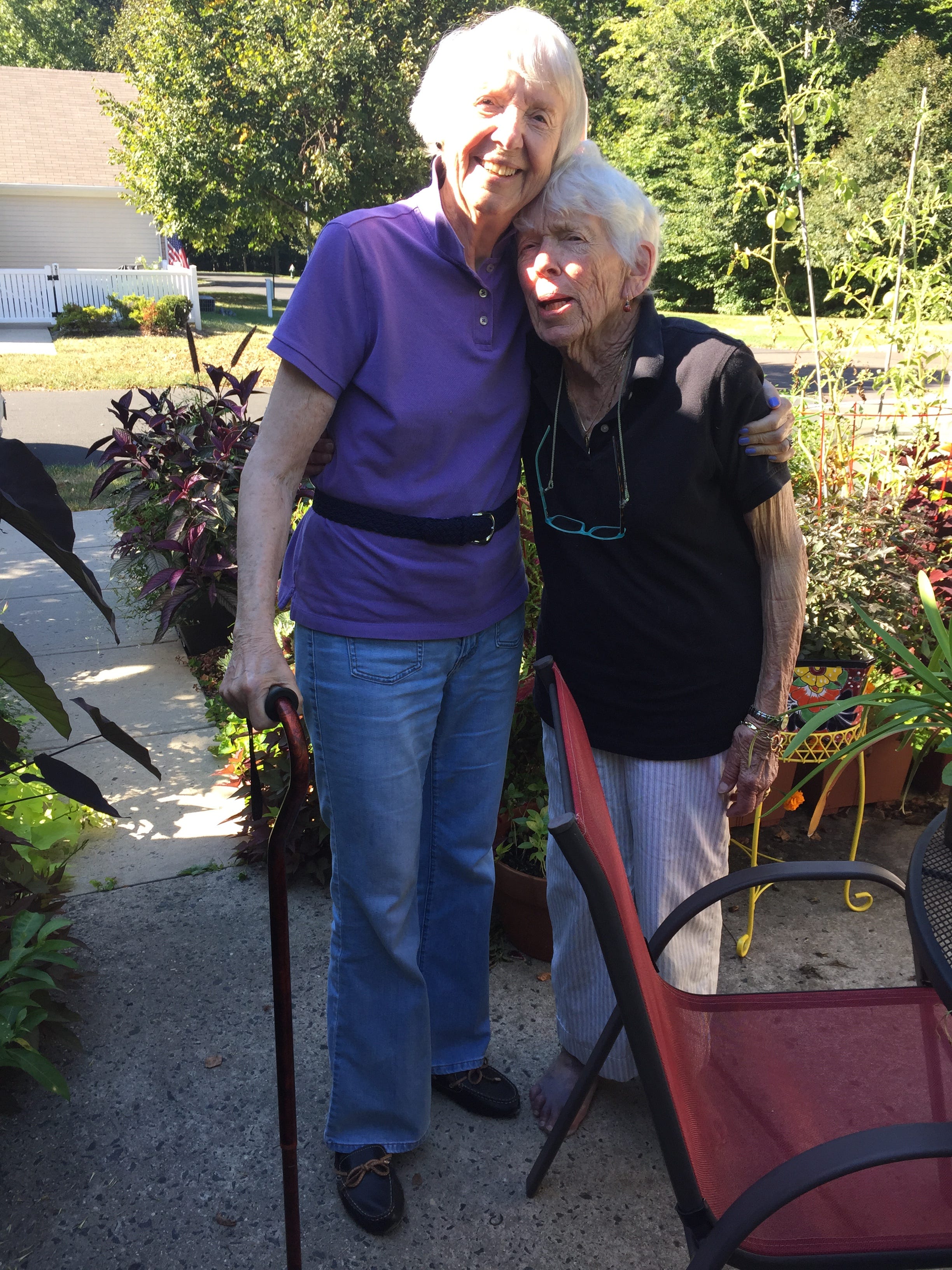
I think mom and Sky have lived experiences that move beyond science and data to teaching us even more about how gratitude fits into what Jon Kabat Zinn calls “the whole catastrophe of living.”
I hold their stories close, feeling tremendous gratitude for where they led me in my musings on gratitude this week.
So . . .
While assigning gratitude practice as homework to clients would most certainly fall under Sky’s definition of annoying, I think he’d happily sign off on the practice as helpful.
In fact . . . sifting through my 100+ Days of MI Snacking emails . . . I know he would.
Look what I found!

Lean In Prompt
I’d love to hear your musings on gratitude in the comments. How does this practice shown up in your life and coaching?
Let’s discuss!
What Gratitude Looks Like for Me This Year
As you can imagine, and maybe glean from my writing, the apple does not fall far from the tree. I cultivate the everyday-kind-of-gratitude my mom practiced with the hopes that, like her, no challenge sent my way will be too great to lean in to.
One of the greatest blessings of my year has been this space on Substack and every reader who finds enough value in my message to subscribe.
Thank you!
Believe it or not . . . I look at each one of your e-mail addresses when I receive the notification. Often they include words like “coaching,” “wellness,” or “mindful,” and I have a moment when I know we are in this together.
Pausing in solidarity, I send each person behind the email clarity, confidence, and good vibes for launching, creating, and leaning into whatever you are building. Then I write on with the intention to be helpful without being annoying.
When Sky talks . . . I listen.
I hope to continue to support your pursuits through my various offerings, and that we all reach our year-end goals and begin again with vigor in 2026!
With a healthy dose of gratitude,
Meg
Resources and Support to End the Year Strong!
You may be tempted to push your coaching business and launch intentions off until the New Year . . . especially if you are in the messiness of trying to get things up and running.
Don’t do that!
I can help you gain clarity around your vision, put your systems in place to open your “doors,” and feel confident and excited about putting yourself out there in the world to find and land your first clients.
The work we do together grows your mindset and eliminates things like imposter syndrome through the action of “doing.”
It’s goes beyond coaching. It’s a strategic partnership.
My Coach’s Corner is a perfect fit for this time of year! 30-minutes of strategic conversation to find your next best step. Take me up on it!
Coach’s Corner: The Ultimate Help Desk for Coaches
These are 30-minute pro bono sessions where we collaborate around any topic that will help you move forward, from identifying your “launch scenario” to gaining confidence and clarity around how to find, engage, and sign potential clients.
Various time slots available on Mondays, Tuesdays, Thursdays, and Fridays.
Coach’s Corner Calendar Link: https://calendly.com/megcoaching/coach-s-corner-1
Wait! There’s More!
I recently consolidated my Lean In To Launching resources in one post for easy access.
Head on over there to learn more about my new NBHWC Board Approved CE along with other resources to help you accelerate your launch and get to the fun part . . . coaching!
Thanks for Stopping By!
As always, thank you for visiting and reading this week. My aim is to always share ideas, stories, and information that provide value in a way that nudges your coaching and the field of health and wellness coaching forward.
If my Substack has been helpful to your process, please spread the word!
Use the buttons below to subscribe (if you are new) and share Lean In To Coaching with your colleagues so we can work together to strengthen our professional field and build thriving solo practices.
Onward!
Meg
I have to admit that gratitude was never on my radar until I began my coaching program. It truly has made a difference in how I approach things in life so including it in my coaching is something I will extend to clients as an invitation in hopes that they will explore it! Thank you Meg for this post and for sharing about your mother and how she invited gratitude in her life.
Thank you Meg. A delightful and helpful read. One of your Mom’s superpowers was most assuredly practicing gratitude 🧡